Case Study — PK Cabinets
How I Fixed the Conversion Leak in a Cabinet Business’s Catalog
One customer buys once. The other buys forty times over five years.
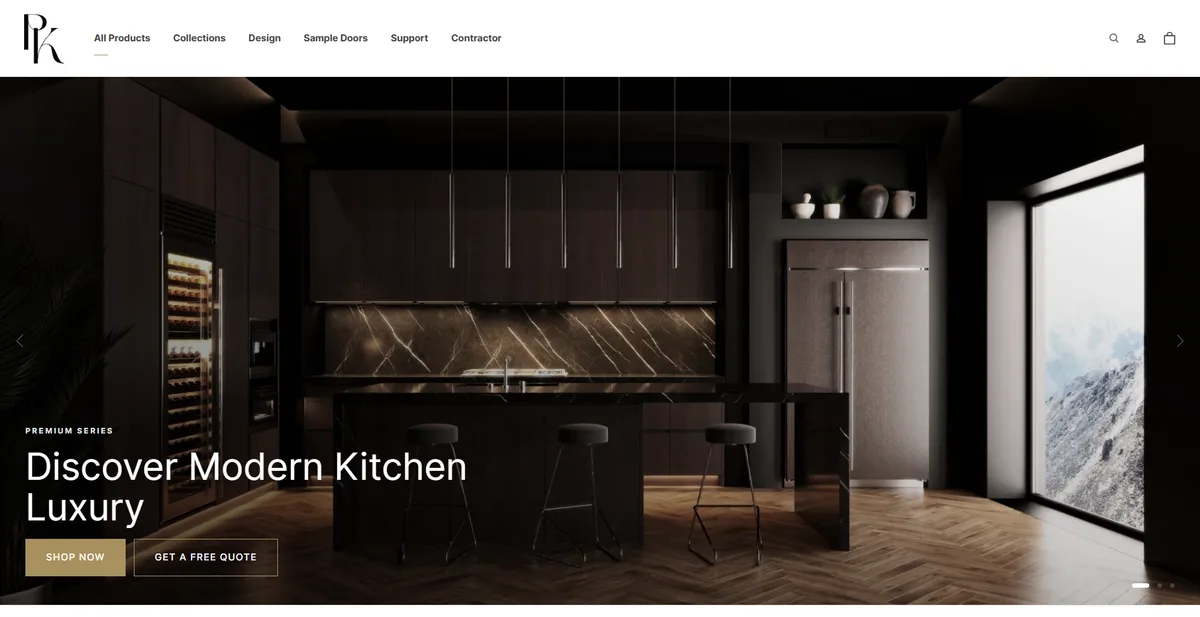
Below is the research I did first, the decisions I made, and the number I’m measuring. If two very different customers are landing on your site and getting treated like one, this one is for you.
The setup
PK Cabinet sells ready-to-assemble kitchen cabinets direct from the factory. In stock, out the door in three days, nationwide.
Two very different people were landing on the site. A homeowner remodeling the kitchen she’ll live in for the next fifteen years, and a contractor who will buy a kitchen this month, another one in March, and another one after that.
The business already knew which one paid the bills. The footer described the company as cabinetry for local businesses. The testimonial header said trusted by contractors and builders. Every product photo, every headline and every call to action on the site was aimed at the homeowner, and the contractor got a link in the navigation labeled Contractor.
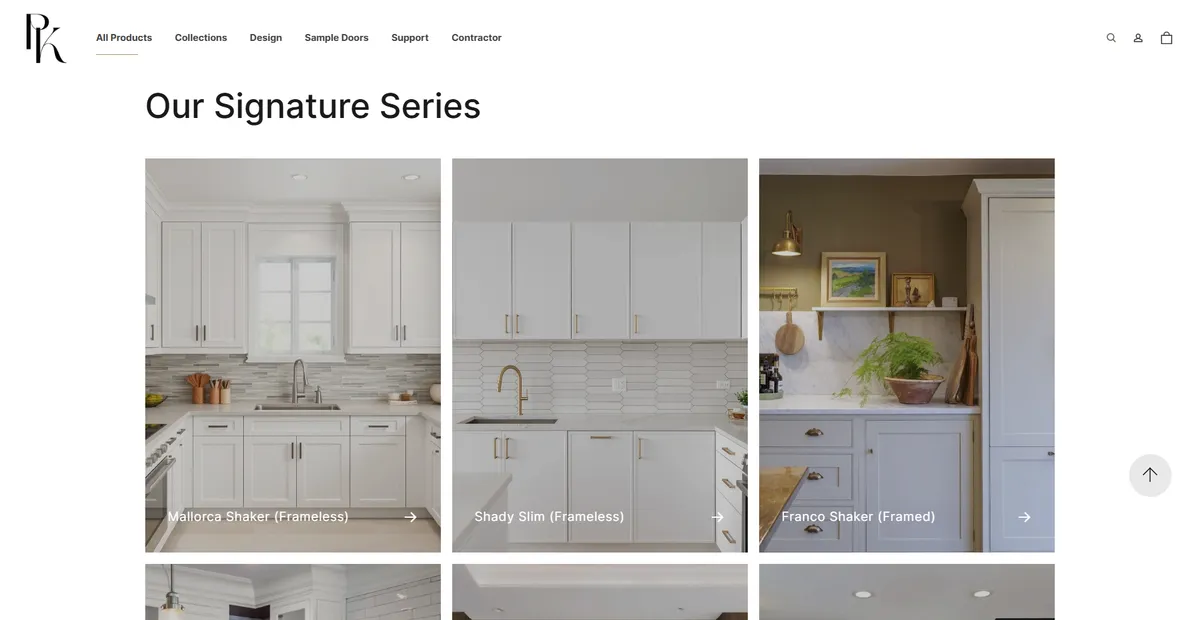
Every photo on the site was shot for her, not for him.
One customer buys once. The other buys forty times over five years and brings their own clients with them. They were being handed the same page, the same prices and the same checkout.
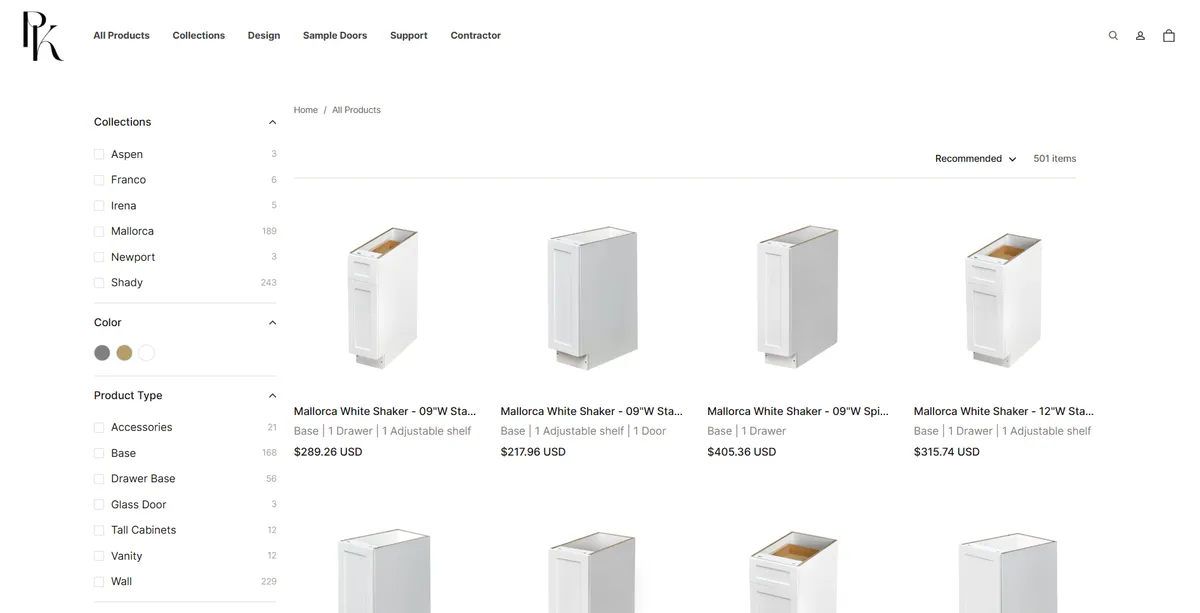
The same catalog, whether you were buying one kitchen or forty.
What I did before I designed anything
I applied to every trade program in the category as a contractor and watched what happened next.
RTA Cabinet Store, Online Cabinets Direct, The RTA Store, Kitchen Cabinet Kings. All of them have a pro or contractor program. Every single one is the same thing wearing different names: a signup form, an approval wait, and a discount code.
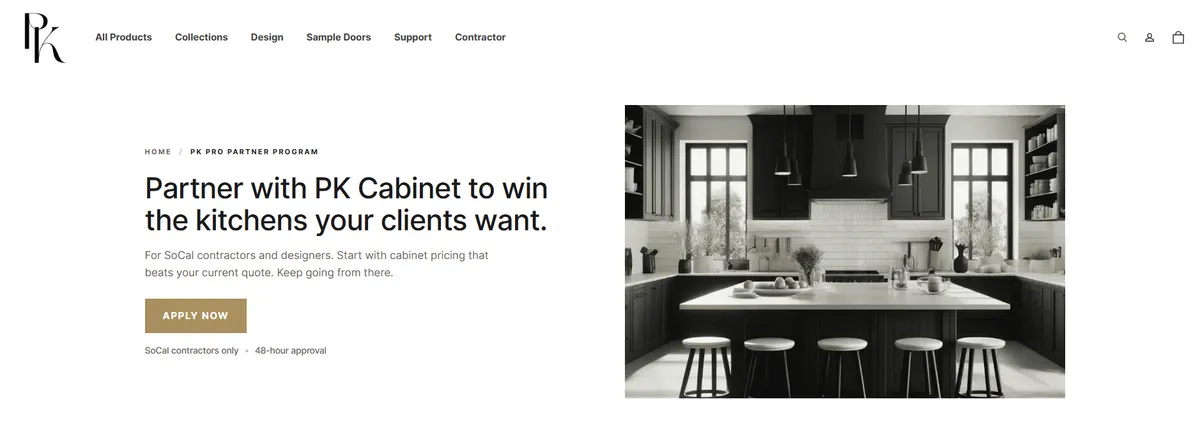
PK Cabinet’s own contractor page: one region, a 48-hour wait.
Not one of them changed the actual experience of buying. After approval you’re still browsing the same catalog, still building the same cart by hand, still guessing whether the sixteen boxes you need are sitting in a warehouse today.
That told me where the opening was. The category competes on the size of the contractor discount, which is a race everybody loses on margin. Nobody competes on what a contractor is short of, which is time and certainty. A builder with a demo scheduled for the 14th doesn’t need 4% off. He needs to know the boxes exist and will land before his crew does.
The decisions
Approval is instant. Enter a license number or EIN and trade pricing turns on in the session. The category makes contractors wait two days for a discount code. A contractor pricing a job on Tuesday night has picked a supplier by Wednesday morning, and the one that answered while he was still on the site gets the job.
Live stock counts on every product page. The three-day ship promise is only worth something if the item is in stock, and the contractor is scheduling a crew around it. Showing the real number turns a marketing claim into something he can plan against, and it does more for order confidence than any badge.
One-click reorder from any past order. A contractor buys the same twelve to twenty SKUs over and over. Rebuilding that cart by hand every time is twenty minutes of unpaid work per job, and the supplier who removes it owns the account. This is the single highest-value thing on the rebuild and it took the least design.
Speed moved out of the trust bar and into the hero. In stock, shipping in three days, in a category where semi-custom cabinetry routinely runs six to eight weeks. That was sitting in a row of small badges under the fold next to the warranty. It’s the strongest thing this business owns and it was formatted like a footnote.
Sample doors ship free on trade accounts. A contractor putting three door styles in front of his own client is doing our selling for us, in a living room we’ll never visit. Charging him $25 for the privilege was the cheapest place on the site to stop making money.
Trade pricing is published, not gated. Volume tiers on the page, visible before signup. Hiding the number behind an application makes a contractor assume the discount is small, because if it were good you’d be leading with it.
Two entry points, not one nav link. Trade gets its own landing page, its own paid traffic and its own lifecycle emails timed to the job cycle rather than the calendar.
The number
Average order value moved to $5,556, up 167% thirty days after launch. On its own that number doesn’t say much in a business selling $25 sample doors next to pallet orders that repeat monthly. It only means something once you know which side of the business pulled it there.
A homeowner buys once. A contractor who reorders is the compounding half of this business, so the number underneath that average is the one I’m actually watching: how much of the order volume is coming from trade accounts, and how many of those accounts come back and place a second one.
That last part is most of my method. Find out who’s actually buying and why the site is treating them the same anyway, build for the behavior that compounds instead of the one that doesn’t, and measure whether the mix shifted before calling it done. Skipping that last step is how agencies end up with case studies made of adjectives.
I’m Shane. I rebuild Shopify storefronts in 14 days and measure the new one against the old one in your own analytics.
01 Short form 02 Quick call 03 More revenue