Case Study — Lynh’s Drinks
How I 6X’d a Drink Catering Brand’s Conversion Rate on High-Intent Traffic
The ads were working. The page wasn’t.
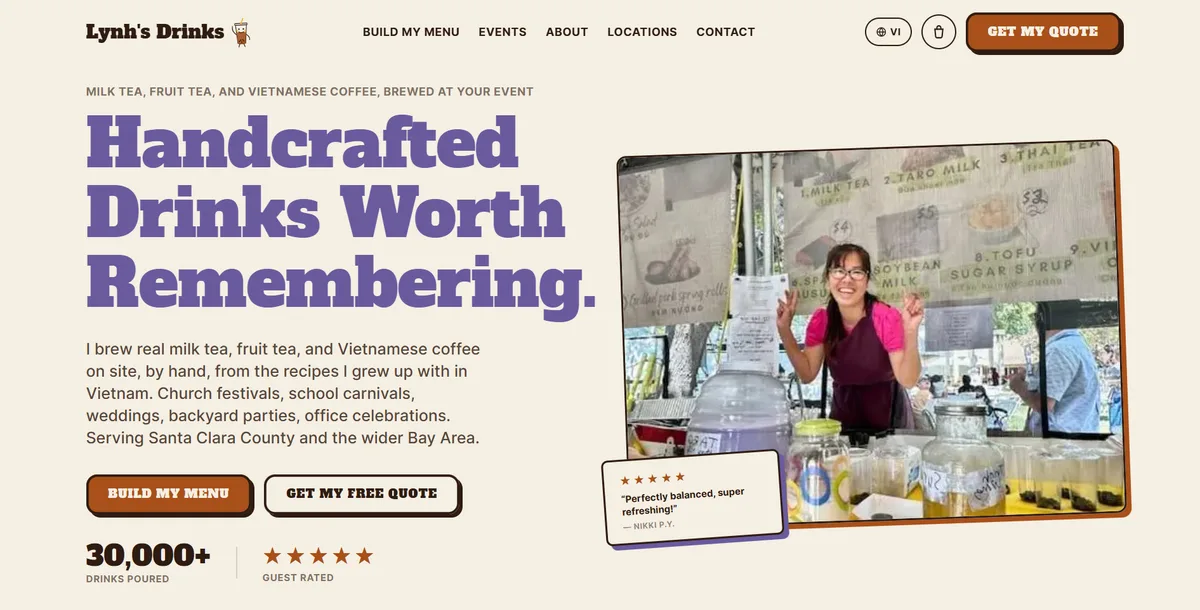
You’re reading this on the site I rebuilt. Below is the research I did first, the decisions I made, and the number I’m measuring. Lynh’s Drinks isn’t a checkout-to-payment store, it’s catering. But I built the menu the way I’d build any ecommerce collection: a real cart, drinks you tap to add, categories you filter by, not a static list you read and then email someone about. If you run paid traffic to a page you haven’t touched in two years, the shape of this problem should look familiar.
The setup
Lynh’s Drinks caters Vietnamese drinks at weddings, birthdays and corporate events across the South Bay. Twenty years in business, 30,000+ drinks served, booked almost entirely by phone and referral.
They also run Google Ads. Real budget, real clicks, on terms like “boba catering san jose.” Those clicks landed on a page with photos, a paragraph about quality, and a contact form.
The ads were doing their job. The page had no conversion event you could count, no price anywhere, and a form that promised a reply within 48 hours. Every dollar of spend was buying a chance to email someone back on Tuesday.
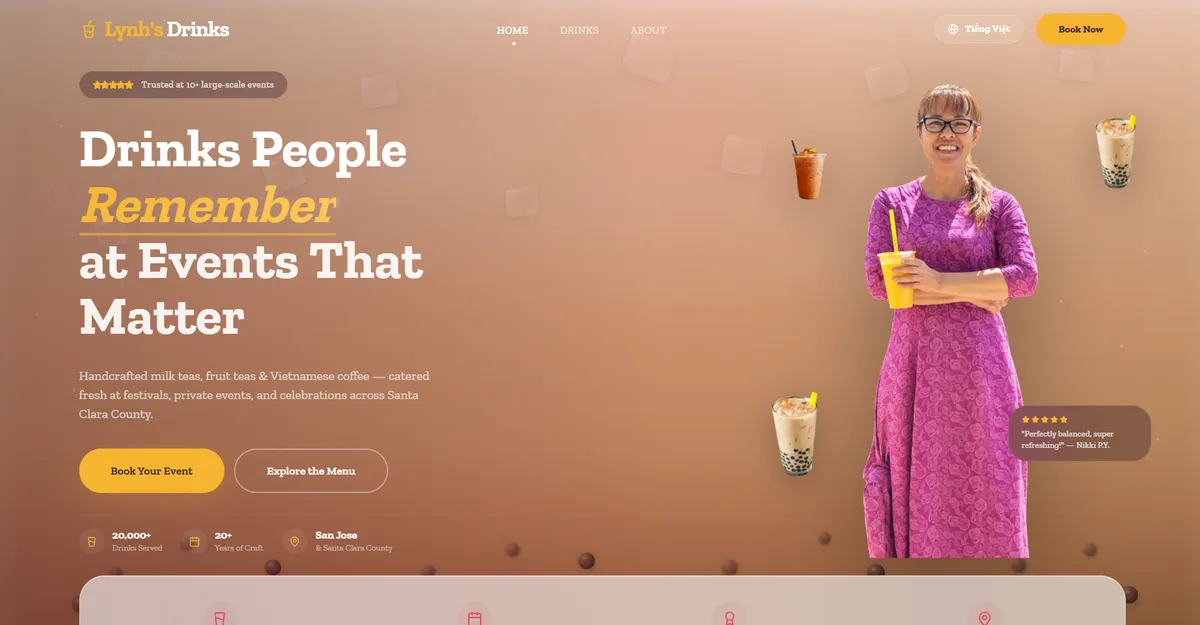
Before — the page the ads were sending clicks to.
What I did before I designed anything
I pulled every drink catering operator I could find in the metro and went through each site the way a buyer would.
Boba Passion. Noveltea. Taro’s Boba Bar. Eleven others. The same page on all of them: hero photo, a promise about freshness, “Request a Quote.”
Not one published a price. So I filled out their forms as a customer and timed the replies. Two days was typical. One never wrote back at all.
That gap decided the build. An entire category had trained its buyers to expect a wait, which meant a site that answered on the page would take the booking before any competitor opened their inbox. Not a better-looking version of what they have. A different transaction.
So the scoreboard I built against:
| Every competitor in the metro | This site | |
|---|---|---|
| Price | After a conversation, if you get one | On screen, in seconds |
| Date availability | Unknown until someone replies | Checked before you fill in anything |
| Time to an answer | Two days | Immediate |
| What the page collects | An email address | A booking |
The decisions
Instant price, not a quote request. Guest count, package, staffed or drop-off, and you see a real total, the same instant-price logic that closes a sale on any ecommerce product page. A form is a promise to sell to you later. A price on screen is the start of the sale.
The objection to this is that showing prices lets people filter you out. Correct. That filtering was already happening, except it happened after hours of unpaid quote-writing instead of in four seconds on the page.
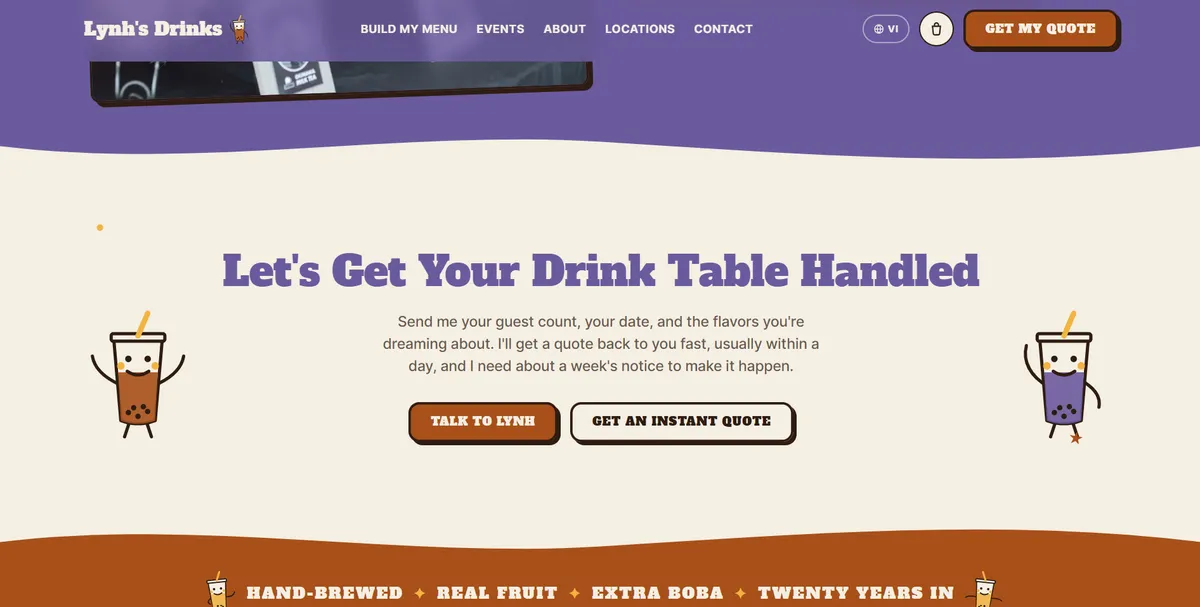
The instant quote replaces the old “email me and wait” form.
The date field comes first. Every competitor asks for it last, under name, email and phone. It carries the most anxiety and it’s the fastest qualifier available. If the date is taken, the page says so and offers the closest open ones.
Guest count is the input. Nobody thinks in units of 400 drinks. They think “we’re expecting about 180 people.” The math happens on our side, the same way a bundle configurator on a Shopify product page runs the math instead of asking the shopper to. The result shows both per guest and total, because the planner comparing vendors thinks per head and the person signing the check thinks in totals.
The menu works like a cart, not a brochure. Every drink is a card with a plus button, filterable by category. Tap it and it’s in her picks, the same add-to-cart pattern as any ecommerce collection page. She’s assembling an order, not reading a laminated list and hoping she remembers what she wanted by the time she calls.
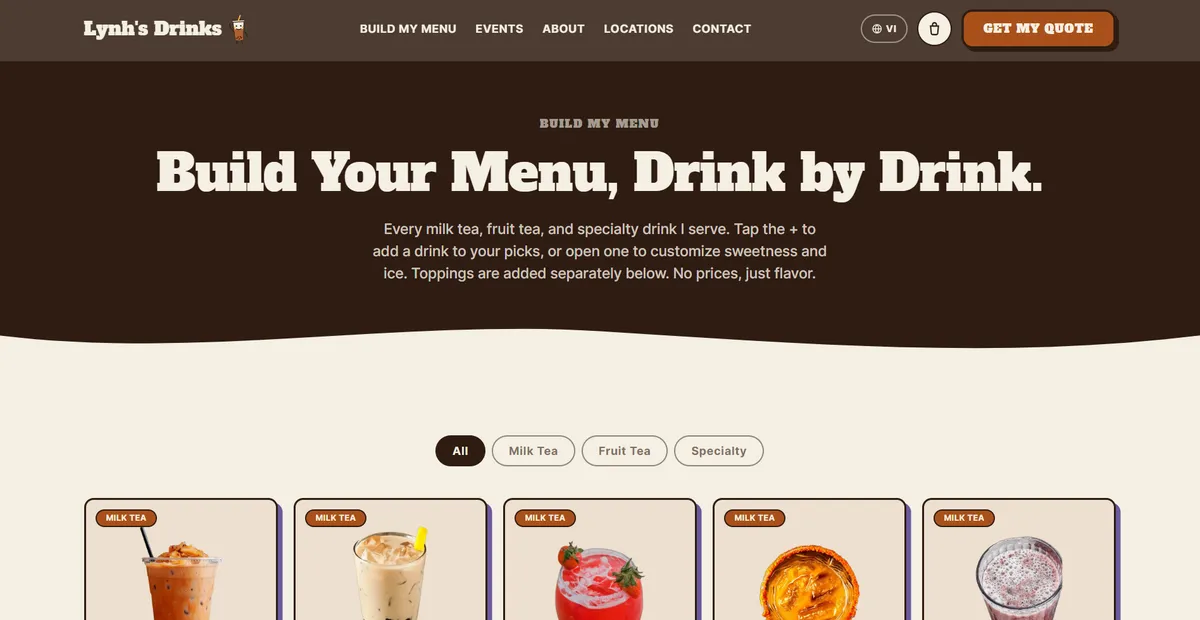
Every drink, filterable, no prices attached to browsing.
The process strip ends on cleanup. Five steps, and the last one is that the team packs out and leaves the venue clean. Event buyers are paying to remove a problem, and the problem in their head is a sticky table at 11pm, not the drink.
Reviews sit next to the price. Not on a separate page, not below the fold. The moment a number appears on screen is the moment someone asks whether these people show up, and the proof needs to be in the same eyeline as the cost.
The story runs below the configurator. Twenty years of history is a closing argument. Someone with an event four weeks out and three tabs open wants a date and a number first. The heritage does its work after that, when she’s choosing between two vendors who both quoted her.
Photography shows the drink cart in a room. Every product-on-white shot came off the site. The buyer is imagining her own event and checking whether this will look right next to her flowers. She isn’t evaluating a macro shot of taro milk tea.
Mobile is the design. This traffic is a link forwarded into a group chat and opened one-handed at 10pm. A sticky bar sits at the bottom of every page and never leaves.
The number
Conversion rate: the share of visits that turn into a completed quote or booking. That’s the event this whole rebuild was built around, so it’s the only number that mattered.
The average order value moving with it says the instant price and guest-count calculator aren’t just converting more visitors. They’re converting them into bigger events.
“They completely redid my entire website. Lots of my customers were complimenting my website. I was getting too many sales, I had to stop running my ads.” — Lynh, owner of Lynh’s Drinks
That last part is most of my method. Study the category before you design, find the thing none of them are willing to do, build the page around a countable event, and record the starting number before you change anything. Skipping the last step is how agencies end up with case studies made of adjectives.
I’m Shane. I rebuild Shopify storefronts in 14 days and measure the new one against the old one in your own analytics. The mechanics don’t change when the checkout is a quote instead of a cart: price on screen, one countable event, a real number at the end.
01 Short form 02 Quick call 03 More revenue